Collection AAMC-001 · 0.4 linear feet
The Georgia Ropeway Association Records, 1926–1931
Finding aid to Collection AAMC-001: engineering drawings, correspondence, and survey material relating to a proposed aerial ropeway of the belt corridor.
Scope and Contents
The collection consists of fourteen items, 1926–1931, bulk 1927, relating to a proposed aerial ropeway survey of the Atlanta belt corridor undertaken by the Georgia Ropeway Association. Materials include engineering drawings, correspondence, one bound survey notebook, and a partial cost estimate.
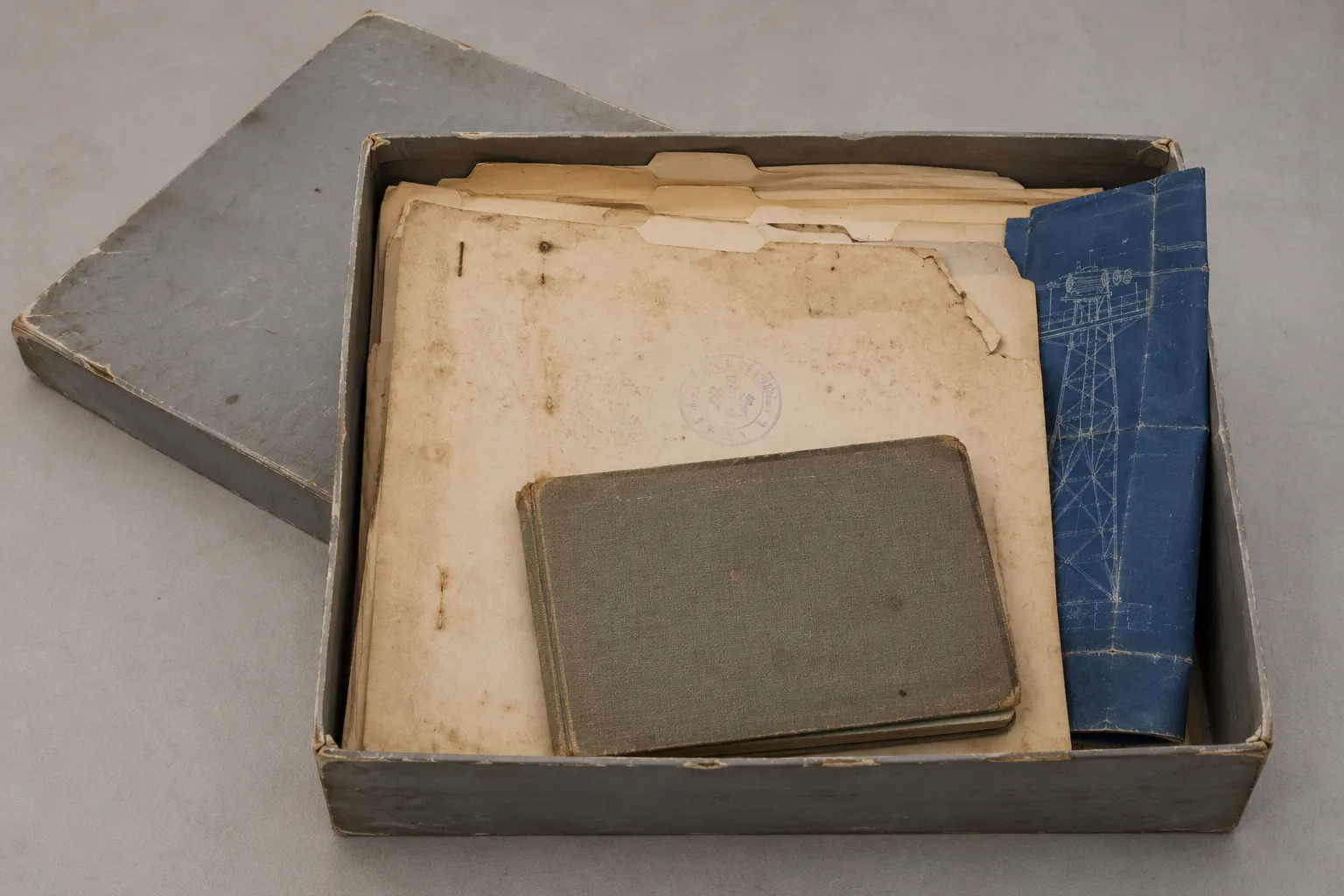
Assembled by the Coalition between March 2025 and June 2026 from materials released by a county records office under the Georgia Open Records Act, together with three items acquired from private hands. Items are described as received. No conservation treatment has been performed.
Historical Note
The belt corridor originates with four rail lines built to encircle Atlanta in the decades following the Civil War. By the turn of the century the ring was substantially complete, and the interior parcels it enclosed had been given over to warehousing, rail yards, and light industry.
Passenger service within the city was operated by the Georgia Railway & Power Company. In 1927 that company ceased to exist as a corporate entity, merging with the Georgia Railway & Electric Company and several other utilities to form the Georgia Power Company, which at its formation served 76 cities and a territory of some 30,000 square miles. Records of the predecessor companies were consolidated, redistributed among several offices, and in some cases not retained.
The same year, the city began construction of the twin viaducts over the downtown railroad gulch. Completed in 1929, the project raised the principal downtown streets by a full story. Merchants moved their entrances up to the new grade; the original street level became basements, storage, and service corridors, and is known today as Underground Atlanta.
It is worth stating the precedent plainly. Presented with a rail corridor it could not resolve at grade, the city built above it, and the earlier condition was covered over rather than removed.
Streetcar service continued in Atlanta until 10 April 1949, when car 897 completed the final run on the Riverline route in the northwest of the city, ending seventy-eight years of operation.
Aerial ropeway engineering of the period was dominated by the Bleichert bi-cable system, patented in the United States in 1888 and manufactured under license by the Trenton Iron Company of Trenton, New Jersey. By the 1920s Trenton-Bleichert installations were in service at mines, quarries, and cement works throughout the country. Passenger application was uncommon but not unknown.
The Georgia Ropeway Association was organized in Atlanta in 1927. Its surviving records identify a single officer: Marion T. Skelton, formerly of the engineering department of the Georgia Railway & Power Company. Skelton left Atlanta in 1931. The Association is not known to have met after that year.
Arrangement
Arranged as received. Original folder order has been retained where it could be determined.
Item List
Box 1, Folder 1
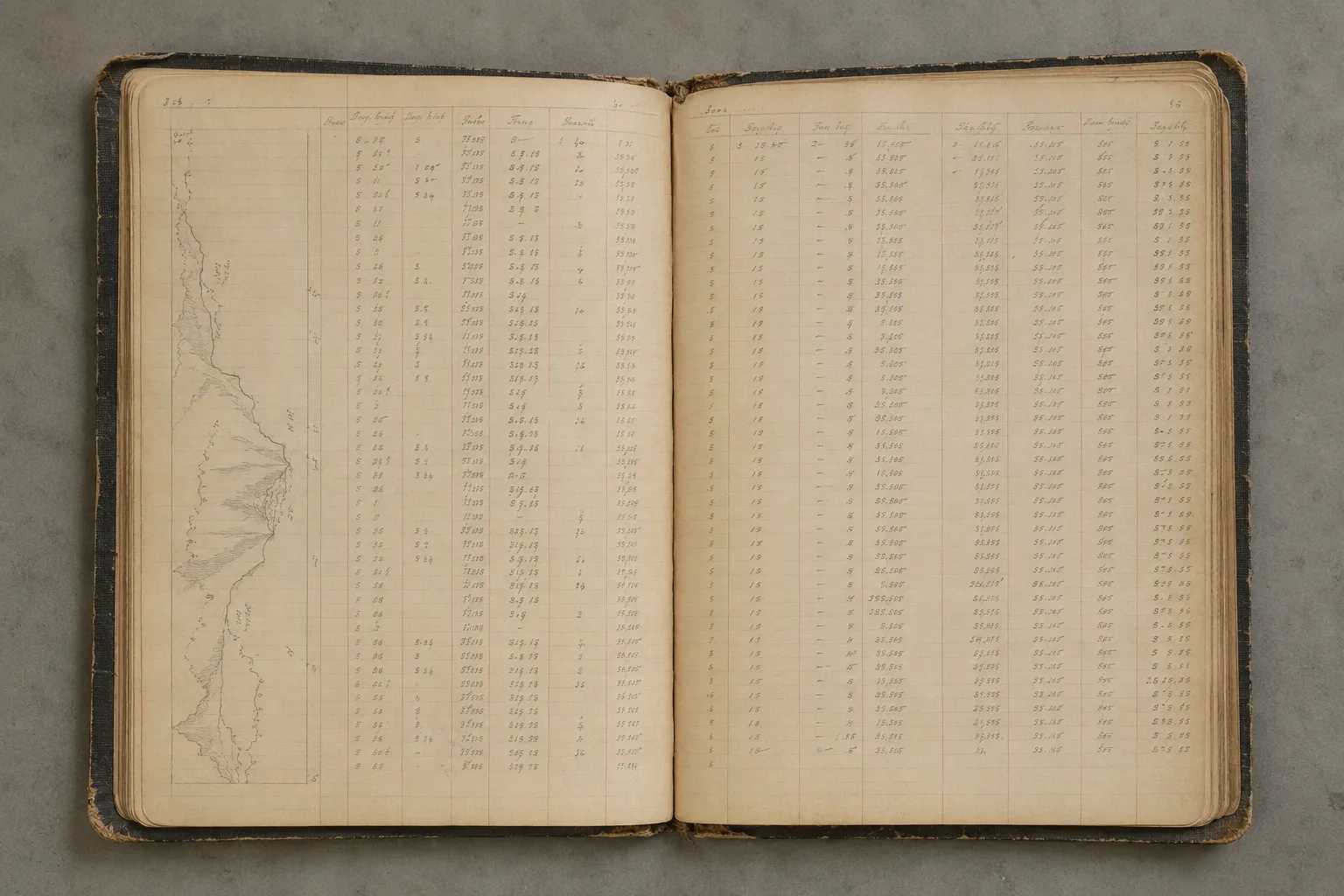
Item 1. Survey notebook, bound, 96 pp. 1926–1927. Pencil on ruled stock, cloth boards, worn at spine. Entries in a single hand throughout.
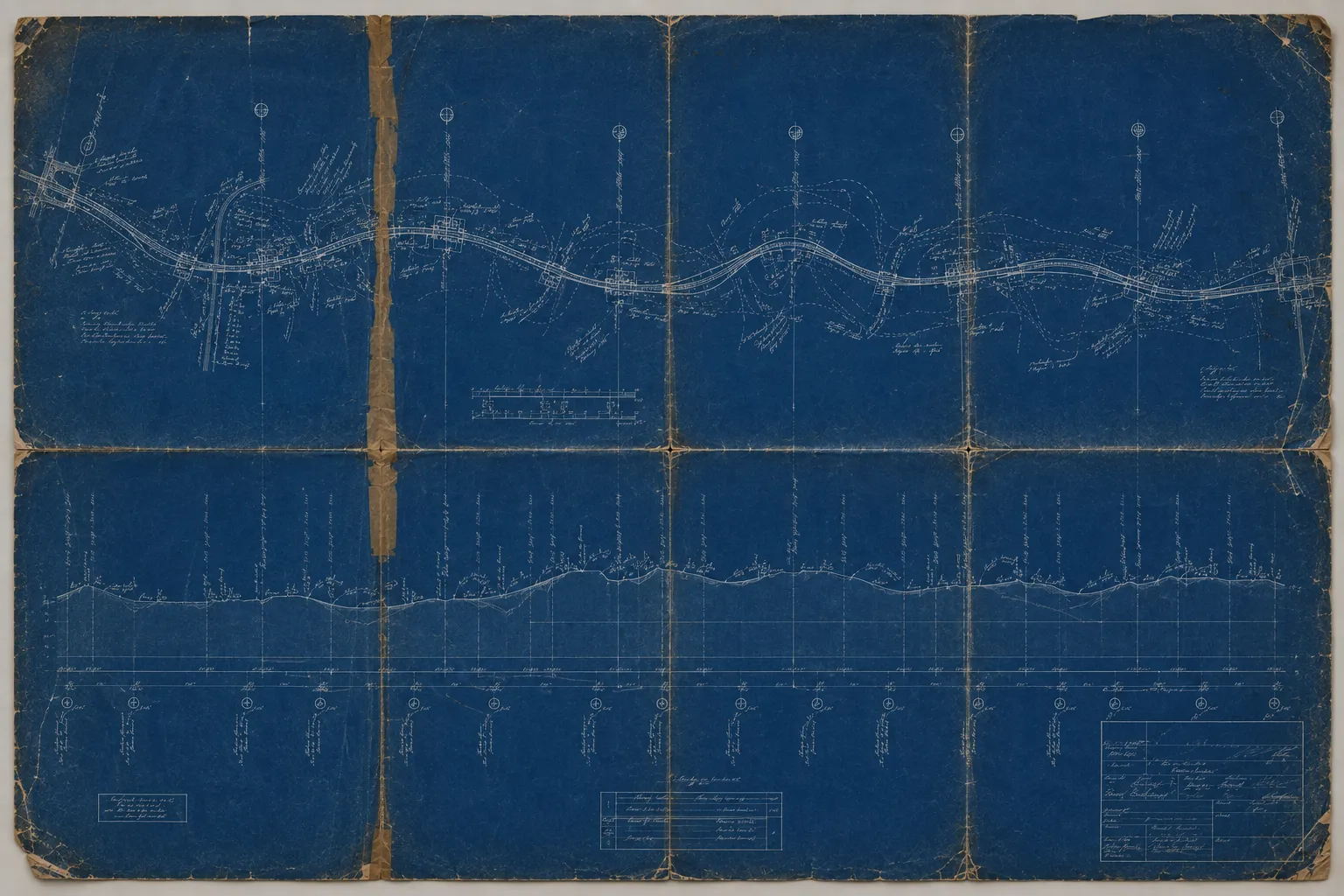
Item 2. Blueprint, corridor plan and profile, sheet 1 of 4. Undated, ca. 1927. Ink on linen, 28 × 41 in.
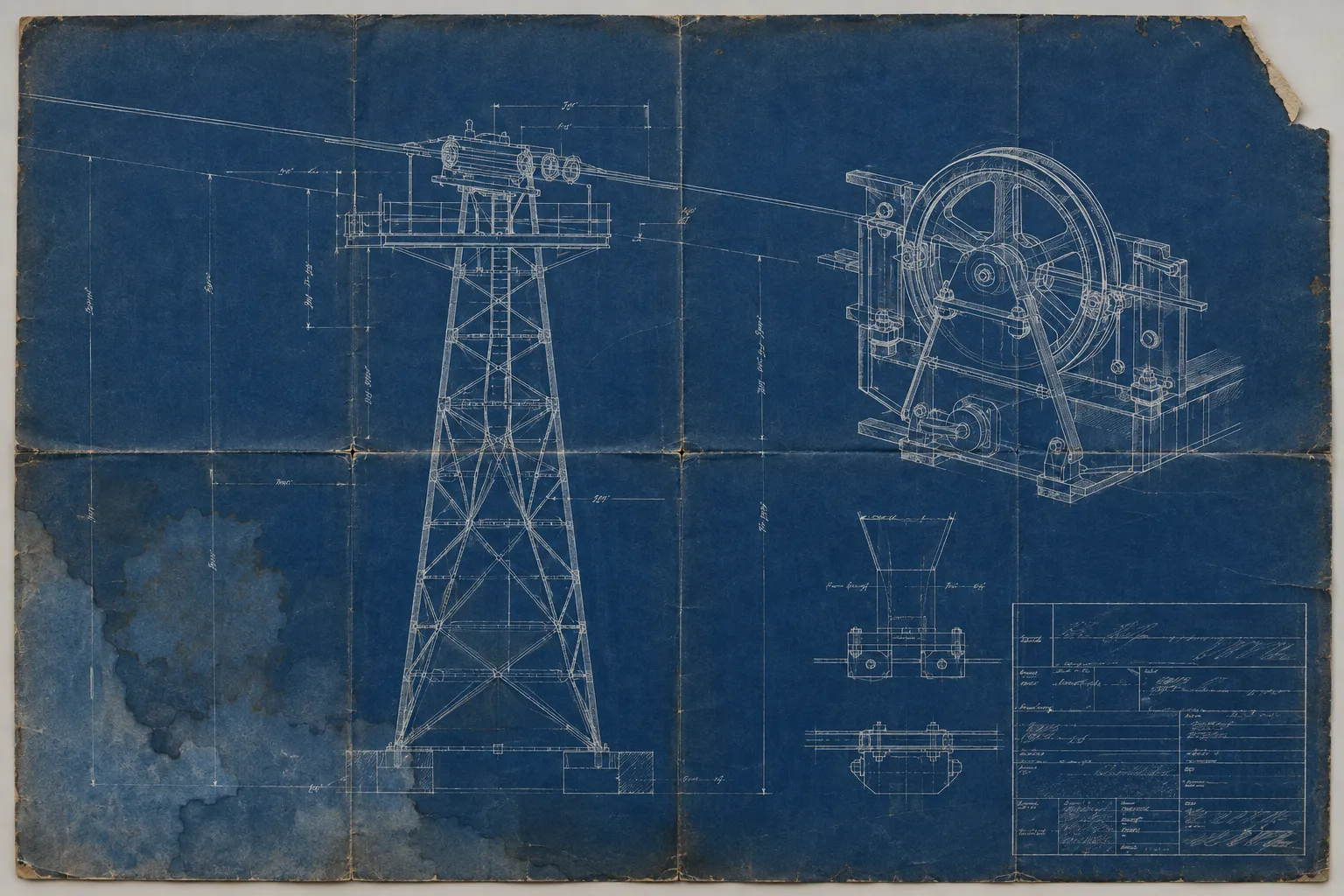
Item 3. Blueprint, tower elevation, sheet 2 of 4. Undated, ca. 1927. Ink on linen. Water damage to lower left corner. Trenton-Bleichert bi-cable system specified in the title block.
Item 4. Correspondence, one sheet, typed carbon. 14 March 1927. Addressed to the engineering department, Georgia Railway & Power Company.
Folder 2
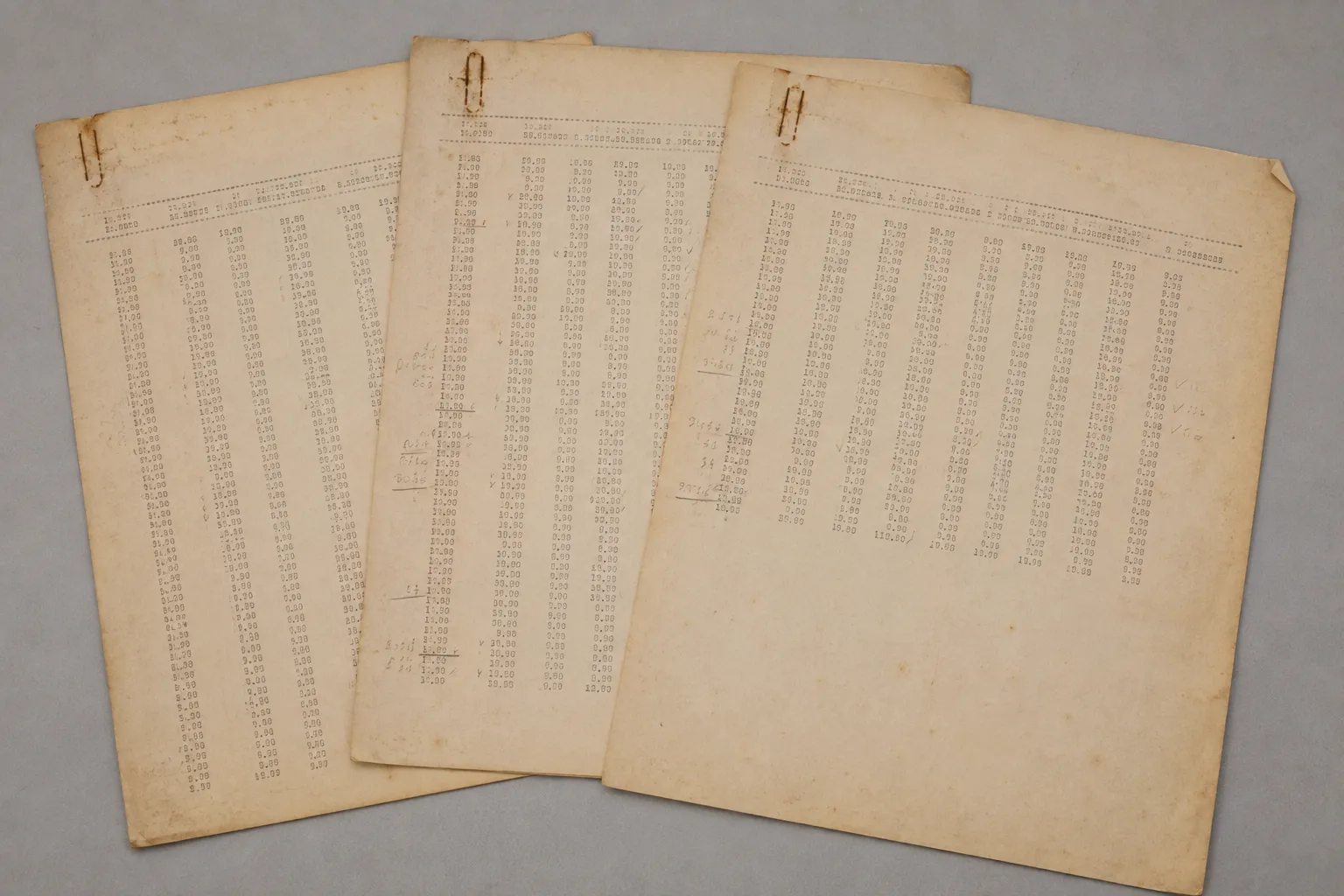
Item 5. Cost estimate, three sheets, typed. Undated. Figures in 1927 dollars. Final sheet incomplete.
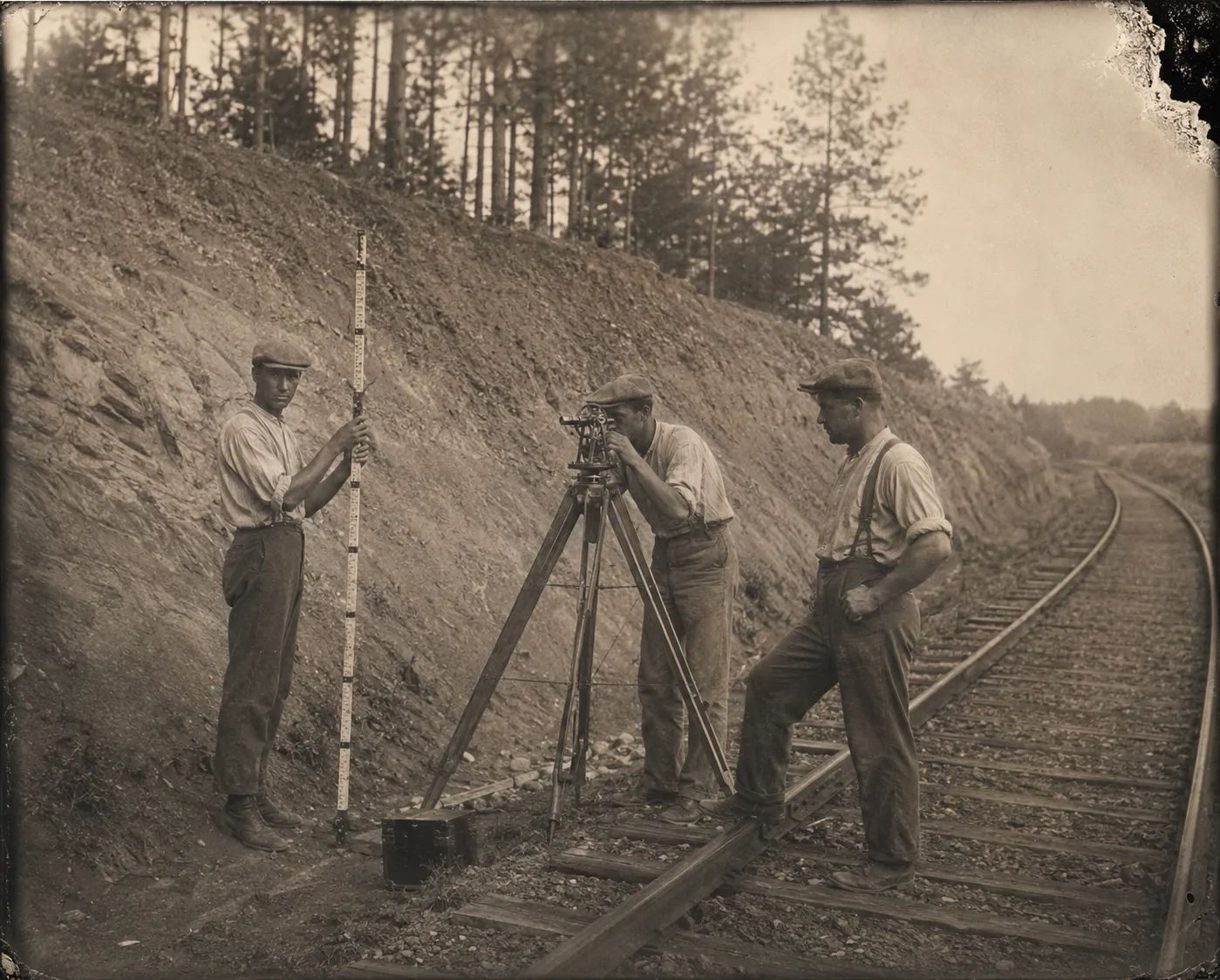
Item 6. Photograph, gelatin silver print, 4 × 5 in. Undated. Three men with a theodolite on a railway embankment. No identification on verso.
Item 7. Correspondence, two sheets, typed carbon. 2 August 1927.
Item 8. Blueprint, station arrangement, sheet 4 of 4. Undated, ca. 1927. Ink on linen.
Folder 3
Item 9. Correspondence, two sheets, typed carbon. Undated. Staple removed.
The sheets are numbered 1 and 3. Sheet 2 is not present. The two sheets were received attached to one another.
See also: Bulletin 14
Item 10. Minutes, one sheet, typed. 11 November 1927.
The minutes record a vote of the membership. The tally is given. The question is not stated.
Item 11. [Not located.]
Item 12. [Not located.]
Item 13. [Not located.]
Folder 4
Item 14. Correspondence, one sheet, holograph. 6 January 1931. Ruled paper, pencil, unsigned, no addressee.
The item was received loose rather than foldered and does not appear on the folder inventory. It is numbered here for convenience.
The sheet consists of a list of nine dates in 1927 and 1928, each followed by a single word or short phrase. Six of the nine correspond to entries in the survey notebook (Item 1). Two correspond to nothing in this collection. The ninth date, 27 May, appears twice.
The hand has been compared against Items 4, 7, 9, and 10, and against the notebook. It matches none of them. The Coalition has not determined who wrote the sheet, when it entered the file, or on what authority it was placed with the other material. It is described here because it was in the box.
Note on Gaps
Gaps in a collection of this age are ordinary. Papers are lost in transfer, discarded by executors, damaged by water, or simply never kept. The Coalition wishes to state plainly that it has no evidence of anything other than ordinary loss.
Items 11, 12, and 13 are not present. They are, however, present in the numbering. The folder inventory that accompanied the transfer lists fourteen items and gives a physical description for each. The descriptions for 11, 12, and 13 read, in order: “Blueprint, sheet 3 of 4.” “Correspondence, one sheet.” “Report, bound, 22 pp.”
Item 8 is sheet 4 of 4. Sheet 3 is described in the inventory as Item 11. The two were therefore separated at some point after the inventory was prepared. The Coalition does not know when the inventory was prepared. It is undated and unsigned.
The most likely explanation is the 1927 reorganization, in which the records of a company that had ceased to exist were consolidated, redistributed, and in some cases not retained. The Coalition offers that explanation first and considers it sufficient.
The Coalition observes only that the three items not located are the three items that describe the route.
Requests for access to the original folder inventory have been made on four occasions. The Coalition will publish the response when it is received.